
Article Summary
Adding a Udemy certificate on your resume starts with knowing where it fits and when it adds real value. This article covers placement, which certificates to include or skip, and how employers view them. You'll leave with a clear, strategic approach to showcasing your learning credentials.
| Question | Answer |
| Can I use a Udemy certificate on my resume? | Yes. |
| Can I add a Udemy certificate to my LinkedIn profile? | Yes. |
| Is Udemy an accredited institution? | No. Udemy certificates demonstrate skills and accomplishments. |
| Do Udemy certificates expire? | No. However, their relevance may decline over time. The value of the certificate depends on how current the skills are within your target industry. |
| How do I add Udemy certificates to my resume and LinkedIn profile? | On your resume, place it in the Education section or Certifications/Professional Development section. On LinkedIn, add it to your profile using Add Licenses & Certifications. |
The technology tsunami is reshaping everything we know about work and the skills you learned in college, while valuable, are becoming obsolete faster than your smartphone. According to the World Economic Forum’s Future of Jobs Report 2025, 39% of a worker’s skills sets will be transformed or become outdated between 2025 and 2030.1
So this is your chance to showcase your commitment to continuous learning through platforms like Udemy. Keep reading to learn:
- How to showcase your Udemy certificates in your resume and LinkedIn profile
- Which certificates to include and which ones to leave out
- How long are Udemy certificates valid?
What Is a Udemy Certificate? Is Udemy Accredited?
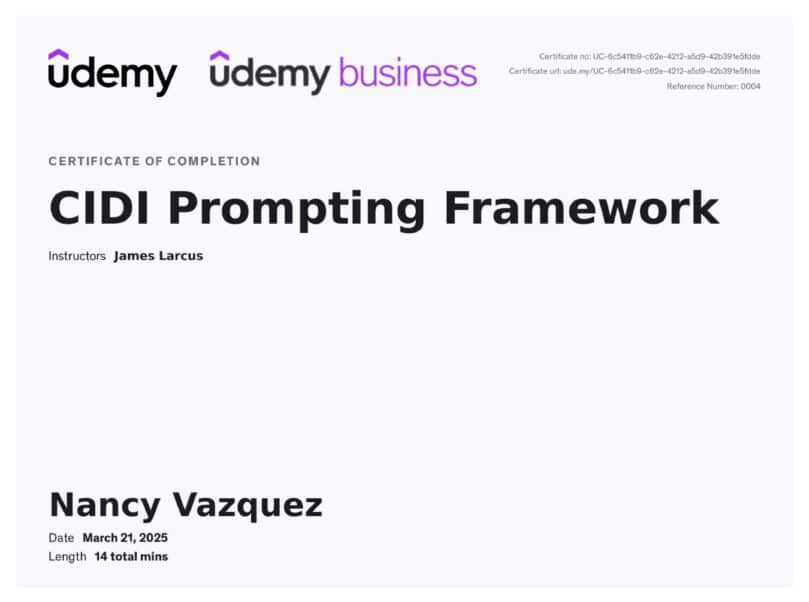
A Udemy certificate is a Certificate of Completion, which recognizes a user’s participation in a course or program. It cannot be used for formal accreditation, but it can demonstrate skills and accomplishments. Udemy certificates are seen by employers as evidence of developing new skills and investing many hours in learning.
Udemy Certificate of Completion vs. Certification (exam-based) vs. Accredited Credential
| Credential Type | Definition | Example |
| Udemy Certificate of Completion | Proof that you completed a Udemy course; not accredited | The Ultimate Project Management PMP Prep Course (35 PDUs) — Udemy |
| Certification (Exam-Based) | Credential earned by passing an exam that validates specific skills against industry standards | Project Management Professional (PMP) Certification – Project Management Institute |
| Accredited Credential | Qualification issued by an institution formally approved by a recognized accrediting body | Project Manager Professional (PMP), from Project Management Institute |
How Long Are Udemy Certificates Valid?
Udemy certificates themselves do not technically expire. However, their relevance does. The value of the certificate is tied to how current the skills are within your target industry.
For example, a Udemy certificate in Machine Learning Fundamentals from 2021 does not expire, but its industry relevance may fade. If the course only covers older techniques and doesn’t include newer developments like transformer-based models, LLM fine-tuning, or modern MLOps practices, employers may view the certificate as outdated.
In other words, the certificate is still valid, but its value decreases as AI evolves.
Pro Tip: It is best practice to prioritize recent courses taken within the last few years and remove older or expired credentials from your profile.
Can I Use a Udemy Certificate in My Resume?
Yes, you can add a Udemy certificate to your resume. Do it with strategic placement and description.
How to Add a Udemy Certificate to a Resume
- Open your resume document
- Add the course to the Education or Certifications/Professional Development section
- When adding the course, cite the title, platform (Udemy), and completion date. Mention the instructor’s name if they are particularly well-known or relevant to your industry
- Include the most relevant skills you learned
- Optional: mention a project or measurable result
Example:
100 Days of Code: The Complete Python Pro Bootcamp by Dr. Angela Yu – Udemy. Completed: August 2025. Key skills: Python, Flask web development, automation, data manipulation (Pandas + NumPy), web scraping. Practical Application: Built 100 hands-on projects, including automation scripts, REST API integrations, small web apps, data-analysis tools, and games.
Pro Tip: Including your Udemy certificate on your resume should always depend on the course’s direct relevance to the specific job you are applying for.
Are you looking for a new challenge? Check this out: Job Searching with AI: The Ultimate Guide with Example Prompts
Is it Worth Putting a Udemy Certificate on LinkedIn?
Yes, as long as it aligns with your professional branding strategy.
How to Add a Udemy Certificate to a LinkedIn Profile
- Click the Me icon at the top of your LinkedIn homepage. Then click View Profile
- Click Add Profile section, then Licenses & Certifications, then Add License of Certification
- Fill in the required information in the pop-up window. Ensure you select the correct issuing organization (Udemy) from the list so its logo appears next to the certification. LinkedIn orders certifications by the date of issue, with the most recent listed first
- You can find more information in the LinkedIn Help Center, Manage Licenses & Certifications.
Note: LinkedIn updates its interface periodically. If a button label differs, check the LinkedIn Help Center for the most recent navigation steps.
Pro Tip! For key certifications directly relevant to your target role, consider mentioning them briefly in your professional summary or headline to signal new skills immediately.
Which Udemy Certificates to Include?
Use this quick decision guide before adding a certificate to your resume or LinkedIn profile.
INCLUDE the certificate if:
- It’s directly relevant to your target role: The skill clearly supports the job you’re applying for.
- The difficulty level matches your career stage: Foundational for entry-level roles; advanced/specialized for mid-senior roles.
- It covers an in-demand skill: Priority areas include AI, big data, cybersecurity, networks, and technology literacy.
- The course is high quality: Strong ratings, positive reviews, and meaningful hands-on components.
- It includes practical application: You completed a project, built something tangible, or can demonstrate measurable results.
- You can explain the outcome: You’re able to describe what you learned and how you applied it professionally or academically.
SKIP the certificate if:
- It’s not relevant to your current career direction.
- It’s outdated or no longer aligned with industry standards.
- You’re listing too many certificates (“certificate overload”): Too many entries can dilute impact and signal lack of focus.
- You’re listing it without context: If you can’t connect it to skills, results, or application, leave it out.
- It overshadows stronger qualifications: Certificates should supplement, not replace, formal education or professional experience.
Rule of Thumb
If the certificate strengthens your professional narrative and demonstrates applied, in-demand skills, include it. If it adds noise instead of value, leave it out.
Beyond the Udemy Certificate: Proving Real Impact
A Udemy certificate confirms completion, but employers also seek proof of practical ability. To demonstrate the real impact of your learning:
- Portfolio Projects: Complement your certificates with projects that showcase the practical application of your new skills. Some Udemy courses already involve completed projects and coding exercises.
- Real-World Experience: Gain practical experience through volunteering, freelancing, or internships in your new field. Real-world application significantly boosts your resume and confidence.
Dive into: How Learners are Future-Proofing Their Careers with AI and Cloud
Key Takeaways
- Udemy certificates are Certificates of Completion.
- Add your Udemy certificate to your resume and LinkedIn profile, but be strategic. Select the most relevant ones and pair them with hands-on projects.
By following these actionable steps, you communicate to employers that you are a proactive learner ready for today’s evolving challenges.
Sources
- Future of Jobs Report 2025. World Economic Forum. January 2025. https://reports.weforum.org/docs/WEF_Future_of_Jobs_Report_2025.pdf