

Article Summary
Entrepreneurship means identifying opportunities, solving real problems, and building scalable ventures through vision and adaptability. This article explores how Michelle Delamor built a media empire using AI, social commerce, personal branding, and continuous learning. You'll gain practical insights into the mindset and modern skills that drive entrepreneurship today.
The entrepreneur mindset has fundamentally shifted in 2026. Today’s most successful business builders aren’t following MBA playbooks—they’re leveraging AI for entrepreneurs, mastering TikTok for business, and building authentic personal brands while scaling rapidly.
The entrepreneurship landscape is experiencing a seismic shift. Traditional barriers to entry have crumbled, artificial intelligence has democratized capabilities once reserved for large corporations, and social commerce platforms enable solo entrepreneurs to generate million-dollar revenues from their bedrooms. The numbers tell the story: the creator economy was valued at $250 billion in 2024 and is projected to reach $1.49 trillion by 2034, growing at a 26.4% annual rate1. The demand driving this growth is equally impressive—as Delamor discovered when researching her show.
“We saw this stat, which was there’s over a hundred million searches for entrepreneur-based content on YouTube a day from Gen Z and millennials.”
Michelle Delamor
Yet, with these unprecedented opportunities comes a new set of challenges requiring fresh strategies and mindsets.
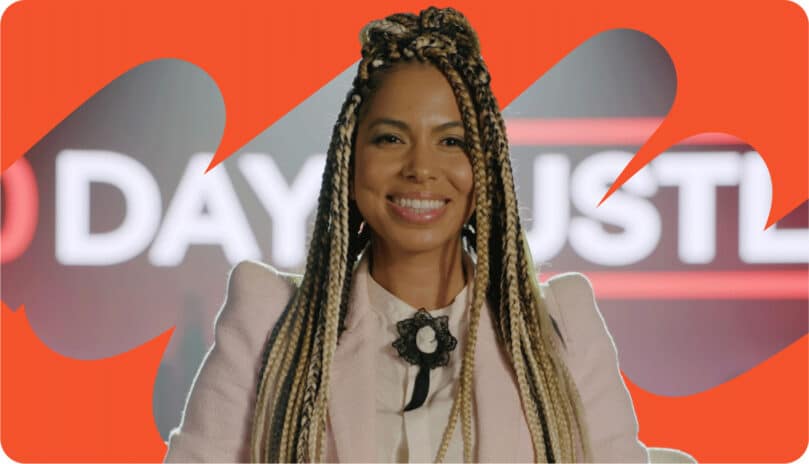
Michelle Delamor, co-founder of Sonic Gods Studios and creator of the Amazon Prime series “60 Day Hustle,” embodies this new breed of entrepreneur. Her journey from American Idol contestant to entertainment mogul offers a masterclass in how to start a business in 2026—and more importantly, how to scale it successfully in an increasingly competitive landscape.
The New Rules of Entrepreneurship in 2026
The fundamental principles of business building have evolved dramatically. Where previous generations of entrepreneurs focused on perfecting their products before launch, today’s successful founders prioritize personal branding, authentic connection, social commerce mastery, and operational speed.
Personal Brand as Business Strategy
In 2026, building personal brand and building your business have become inseparable activities. “People really gravitate towards the founder,” Delamor notes. “It’s this personal brand era where people want to support companies where they get to know the founder.”
The most successful entrepreneurs understand that their personal story, expertise, and authentic voice become valuable business assets. Social media platforms reward consistent, genuine content that provides value while building relationships with potential customers.
This shift represents both an opportunity and a requirement for modern entrepreneurs. The statistics support this trend: 77% of solopreneurs reported profitability in their first year2, well above employer businesses, demonstrating that the one-person business model can be both sustainable and lucrative.
Want to dig deeper? Here’s a course you might find useful: Personal Branding Master Course | Become THE Go-To Person
Authenticity Over Perfection
The shift toward authentic content creation has redefined how entrepreneurs build their personal brand. Where polished, corporate-style content once dominated, audiences now gravitate toward genuine, vulnerable storytelling.
“Your vulnerability is your strength, and just being yourself and not having it all together is the thing that gets people to connect,” Delamor observes. “No one relates to the person that has it all together. You want to champion the underdog.”
This trend reflects broader changes in consumer behavior. People want to support companies where they can connect with the founder’s journey, struggles, and authentic personality rather than faceless corporate entities.
Related: Small-Town Entrepreneur to Reality TV Winner: Brittany Caldwell’s Go Brazee Success Story
The Social Commerce Revolution
Perhaps no trend better illustrates the new entrepreneurship landscape than the explosion of social commerce. Delamor witnessed this firsthand while producing “60 Day Hustle,” where she observed entrepreneurs leveraging platforms like TikTok Shop to generate staggering revenues.
“It is absolutely wild how you can be an entrepreneur and literally go on a live in your bedroom and sell out of your product without a large production, by being totally relatable,” she shares.
The numbers speak for themselves. During filming, they featured Stormi Steele, the number one live seller on TikTok Shop, who broke the record by selling a million dollars worth of products in a single live session. Delamor witnessed the power of this direct connection firsthand: “This girl made 100 grand in 10 minutes, just literally talking to her audience. That is revolutionary in terms of the kind of connection that you can have with your customers. It’s something that we’re going to be leaning into a lot. And it was amazing to see all of the contestants adopt that and lean into it more. It was like such a light bulb moment.”
This represents a fundamental democratization of commerce. Traditional retail channels, advertising agencies, and complex distribution networks are no longer prerequisites for reaching massive audiences.
Speed as Competitive Advantage
While personal branding and authentic content provide the foundation for modern entrepreneurship, the ability to execute and scale rapidly often determines who wins in competitive markets. For Delamor, speed represents the biggest opportunity available to entrepreneurs today, and artificial intelligence serves as the primary enabler of that acceleration.
This represents a paradigm shift. AI for entrepreneurs has moved from luxury to necessity. Delamor’s team uses artificial intelligence for research, content creation, and even complex list-building tasks that previously required extensive manual labor. “I have team members that are building out lists that would take so long, and it’s just doing its own thing,” she notes.
The implication is clear: entrepreneurs who fail to leverage AI tools will find themselves at a significant disadvantage against competitors who embrace these technologies.
Want to dig deeper? Here’s a course you might find useful: The Complete Prompt Engineering for AI Bootcamp (2026)
Case Study: Michelle’s Strategic Evolution
Delamor’s entrepreneurial journey illustrates how modern businesses can evolve organically while maintaining focus on impact and scalability. Her path demonstrates key principles that aspiring entrepreneurs can apply regardless of their industry.
From Reality TV to Business Insight
Delamor’s experience as an American Idol finalist provided unexpected entrepreneurial education. Rather than viewing the show purely as entertainment, she studied the mechanics of how media businesses operate at scale.
“It felt like a bit of a circus,” she recalls. “The machine is structured and it’s massive, but as a talent you’re like, this is crazy. It’s understanding as a talent that there’s a TV show and there’s millions of people that are going to watch, and this is a real business for them.”
This insider perspective later became a competitive advantage when creating “60 Day Hustle.” Having experienced reality television from the contestant side, she understood how to design a more empowering experience. “I’m so conscious of what the talent experience is like, having experienced it myself,” she explains. “Because at the end of the day these are their dreams and we’re helping hopefully accelerate those dreams and we want the experience, as wild as it may be, to feel as empowering and inspiring as possible.”
This mission-driven approach to business competition distinguishes “60 Day Hustle” from traditional reality television, where drama often overshadows genuine development and growth.
Starting with Real Problems
After American Idol, Delamor discovered her true entrepreneurial calling when fellow contestants reached out about personal struggles. “There were a lot of girls that reached out to me sharing some of the struggles they were going through—depression, all sorts of things. I felt deeply that I needed to do something about this.”
This led to her first company, No Girl Left Behind, a social impact organization that combined entertainment with transformational experiences. “I would perform and then we’d break into a transformational conference experience. We had thousands of girls in the room at each event and the most life-changing things would happen. We saw tens of thousands of girls across the nation with that program.”
The business model emerged organically when brands wanted to participate in the movement. “We had a lot of brands that wanted to be a part of the impact. All sorts of amazing brands joined the mission, and that was the beginning of me learning what it looked like to create partnerships with brands that could be really impactful.”
Accidental Scaling and Strategic Pivots
Rather than forcing a predetermined business model, Delamor allowed market demand to shape her company’s evolution. “We kind of accidentally became an advertising agency because we were working with so many brands.”
This organic growth eventually led to Sonic Gods Studios, where Delamor and her husband Chris combined their complementary skills—her understanding of impact-driven content and his expertise in visual storytelling—to create a new type of entertainment company.
The key lesson: successful entrepreneurs start by solving real problems for real people, then allow sustainable business models to emerge from genuine market demand.
Common Startup Challenges and How to Navigate Them
Despite new opportunities and tools, certain startup challenges remain universal. Delamor’s experience building Sonic Gods Studios reveals common pitfalls and practical solutions for overcoming them.
The “Build While Flying” Reality
“Everything is like, build the plane while you’re flying it,” Delamor admits. This sentiment captures the fundamental challenge of entrepreneurship: making critical decisions with incomplete information while maintaining forward momentum.
However, she offers reassuring perspective: “What I have learned is that everyone is building the plane while they’re flying it. Even the largest organizations are figuring it out as they go.”
The key is accepting uncertainty as a permanent condition rather than a temporary problem to solve. Successful entrepreneurs develop comfort with ambiguity and focus on making the best decisions possible with available information.
Want to dig deeper? Here’s a course you might find useful: Decision Making under Stress & Uncertainty – 9 Strategies!
Team Building Mistakes
One of Delamor’s most expensive lessons involved hiring decisions early in the company’s growth. “In the very early stages, we were like, let’s bring on a heavyweight from a major studio, and they will really be able to help drive this with us.”
The experiment failed because corporate experience doesn’t necessarily translate to startup environments. “What I found was that they had valuable context from what had worked historically in the industry, but since we’re building something that hasn’t been done before, it required a level of nimbleness and willingness to roll up their sleeves that’s very different from a corporate environment.”
The mismatch highlighted a crucial difference between corporate and startup mindsets. “When you take someone from a corporation that isn’t actually used to operating in a startup environment, those worlds don’t work as well.”
The solution was returning to core principles: “We went really stripped back, really nimble, and everything started moving fast. We started building from there, just trusting ourselves and our vision and our ability to learn and figure it out.”
Reframing Failure as Learning
Through observing “60 Day Hustle” contestants, Delamor identified the mindset that separates successful entrepreneurs from those who struggle. “The ones who make it the furthest are the ones who are willing to fail fast and just try the thing they haven’t tried before.”
She contrasts two approaches: “Some contestants are very hesitant on certain challenges because they’ve never done it before, and they get down on themselves versus the ones that are like, ‘okay, we’re here to learn, let’s do this thing.'”
The key insight is anchoring on learning rather than outcomes: “If you’re anchored on the learning of it all, if you’re like ‘okay, cool, got that context, let’s keep it moving,’ and you’re always focused on that versus the outcome—those are the people that we see do really well.”
Want to dig deeper? Here’s a course you might find useful: Growth Mindset: The Key to Confidence, Impact & Fulfillment
Modern Entrepreneur Toolkit: Essential Skills and Technologies
Today’s entrepreneurs need a fundamentally different skill set than previous generations. The tools and strategies that drive success in 2026 combine traditional business fundamentals with cutting-edge technologies and new platforms.
Leveraging AI for Business Acceleration
Artificial intelligence has evolved from futuristic concept to practical business tool. Delamor’s team uses AI across multiple functions to achieve what would traditionally require much larger teams.
Practical applications include research acceleration, content generation, and task automation. “It’s really amazing to be able to research a lot faster, to be able to get some really great insights and information. And now even looking at agent mode, it’s incredible.”
For entrepreneurs just starting out, AI represents a massive democratization of capabilities. Solo founders can now access research, analysis, and content creation capabilities that previously required specialized teams or significant budgets.
Want to get started? Here’s a course you might find useful: ChatGPT Crash Course: Introduction to ChatGPT for Work
Mastering Social Media Marketing
Beyond the dramatic revenue potential of platforms like TikTok Shop, social media marketing for entrepreneurs requires understanding platform-specific strategies and audience behavior. The shift toward social commerce demands new skills that go far beyond traditional posting and engagement.
Successful entrepreneurs on social platforms focus on building genuine communities rather than just follower counts. This means consistently providing value through educational content, behind-the-scenes glimpses of business operations, and transparent sharing of both successes and challenges.
The most effective approach involves understanding each platform’s unique features and algorithms. TikTok rewards consistent posting and trend participation, while Instagram favors high-quality visuals and story engagement. LinkedIn serves as a powerful networking tool for B2B entrepreneurs, and YouTube enables long-form educational content that builds authority.
For entrepreneurs looking to master these evolving platforms, comprehensive social media marketing training can provide the systematic approach needed to build sustainable audience growth and conversion strategies. The key is treating social media as a legitimate business channel that requires the same strategic planning and skill development as any other core business function.
Want to dig deeper? Here’s a course you might find useful: Digital Marketing Masterclass:Get Your First 1,000 Customers
Financial Fundamentals for Sustainable Growth
While new tools and platforms create exciting opportunities, Delamor emphasizes that business fundamentals remain crucial. Her biggest regret involves not prioritizing financial literacy earlier in her entrepreneurial journey.
“If I were to start over, I would say, prioritize jumping into the numbers, and truly understand financials. Focus on creating a foundation for a company that can be scalable, that can be cashflow positive, that can be really valuable and have strong EBITDA. Build it as if you were to sell it, even if you’re not planning to sell it.”
She acknowledges that this advice might seem overwhelming for new entrepreneurs: “I know that those sound like themes that feel really big in the beginning when all you’re thinking about is starting something, but it’s important to understand what business models work, and what doesn’t work. So you’re not spending years and years building something that isn’t going to be profitable in the long run.”
This practical approach reflects a crucial truth: passion and innovative tools must be combined with solid business fundamentals to create sustainable ventures. For entrepreneurs looking to build this financial foundation, business fundamentals courses can provide the systematic understanding needed to avoid costly mistakes and build scalable, profitable companies from the start.
Want to get started? Here’s a course you might find useful: Finance for Entrepreneurs & Small Businesses
Continuous Learning as Competitive Advantage
The pace of change in modern business requires entrepreneurs to embrace lifelong learning. Delamor maintains a disciplined approach to skill development: “Each morning I wake up, I meditate, do a little Tai Chi and then I listen to an audiobook or a course. I am always learning—that’s such a core part of everything.”
She credits online learning platforms with part of her business education: “It literally started with a course. Chris, my husband and co-founder, fell in love with a camera, had never used it before, got a Udemy course and all of a sudden was doing ads and commercials. Same with me—learning operations and business, and understanding how to go from being a talent on stage to actually running a company.”
This approach to learning reflects the reality of modern business: the pace of change requires continuous skill development. Whether through business fundamentals courses, AI and automation training, or digital marketing programs, successful entrepreneurs view education as an ongoing investment rather than a one-time event.
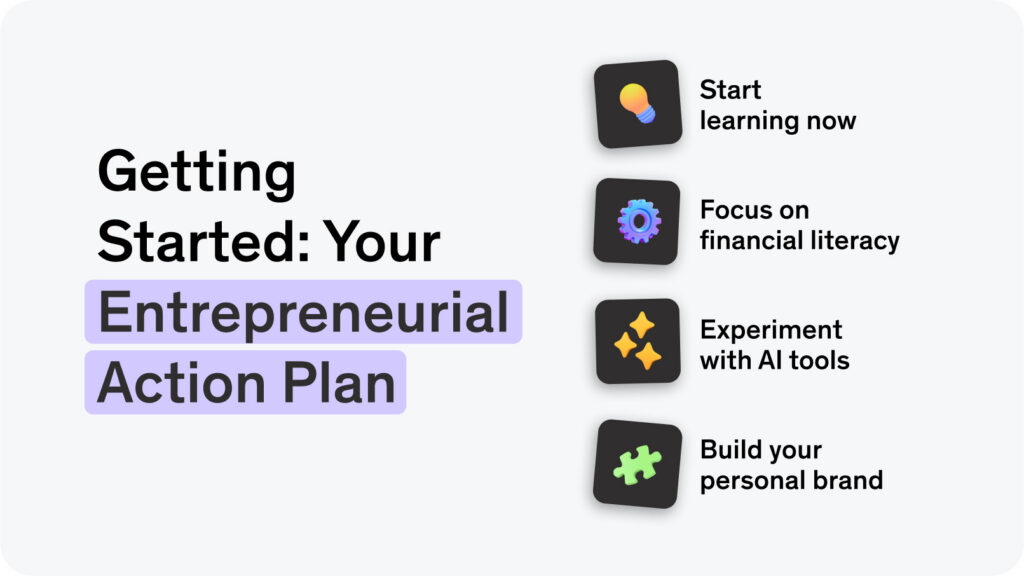
Getting Started: Your Entrepreneurial Action Plan
For aspiring entrepreneurs inspired by Delamor’s journey and the opportunities available in 2026, success requires combining mindset shifts with practical action steps.
Immediate Next Steps
- Start Learning Now: Begin building your knowledge base through structured learning. Whether through entrepreneurship courses, industry-specific training, or digital marketing programs, invest in your education before you need the skills.
- Experiment with AI Tools: Familiarize yourself with ChatGPT, automation platforms, and other AI tools that can accelerate your business development. Start small with research tasks or content creation to understand their capabilities.
- Build Your Personal Brand: Begin sharing your journey, insights, and expertise through social media platforms. Focus on providing value and building authentic relationships rather than promoting products or services.
- Focus on Financial Literacy: Understand basic business metrics, cash flow management, and scalable business models before launching your venture.
Long-term Strategic Considerations
Delamor’s advice centers on timing and opportunity recognition. Rather than waiting for perfect conditions, successful entrepreneurs learn to identify emerging platform opportunities before they become saturated.
“There’s always going to be these opportunity windows for new innovations that happen in this space. (…) There was a period where there was a huge Facebook boom and advertising was super low cost and you could get your product out in a really big way. And then the boom with Amazon, Pinterest. And now we’re seeing that with TikTok Shop. Not as many people as you think are talking about it or know about it as much in terms of really utilizing this as a powerful platform. So I think it’s definitely an amazing time to take advantage of that.”
Michelle Delamor
Want to get started? Here’s a course you might find useful: TikTok Marketing: Grow Your Account & Master TikTok Ads
This historical perspective reveals a crucial entrepreneurial skill: pattern recognition. The entrepreneurs who built significant businesses on early Facebook advertising, Amazon marketplace, or Pinterest marketing weren’t necessarily smarter—they were simply willing to experiment with new platforms while others waited for proof of concept.
The key is starting with a learning mindset, embracing new tools and platforms, and maintaining focus on solving real problems for real people. As Delamor’s evolution from reality TV contestant to media mogul demonstrates, there’s no single path to entrepreneurial success—but there are proven principles that can guide your journey toward building something meaningful and sustainable.
Related: Ready to start your entrepreneurial journey? Check out the courses “60 Day Hustle” contestants used on the show, all available within Personal Plan by Udemy.
Sources
- Global Creator Economy Market Size and Share Analysis. Coherent Marketing Insights. March 2025.
- Behind the Boom in Solopreneurship: Who’s Starting Them and Why. Gusto. July 2025.